Which Plastic Bottles Are Recyclable? A Simple Guide
Which plastic bottles are recyclable? In most U.S. curbside programs, the answer starts with the bottles and jugs you use most: clear soda and water bottles and the opaque jugs that hold milk, juice, and laundry detergent. Beyond those, acceptance depends on the type of plastic, the shape of the container, and what your local recycling facility can actually sort and sell. This guide explains how to read the little number on the bottom, which bottles are usually welcome, which ones cause trouble, and how to prep everything so it takes up less room in your bin.
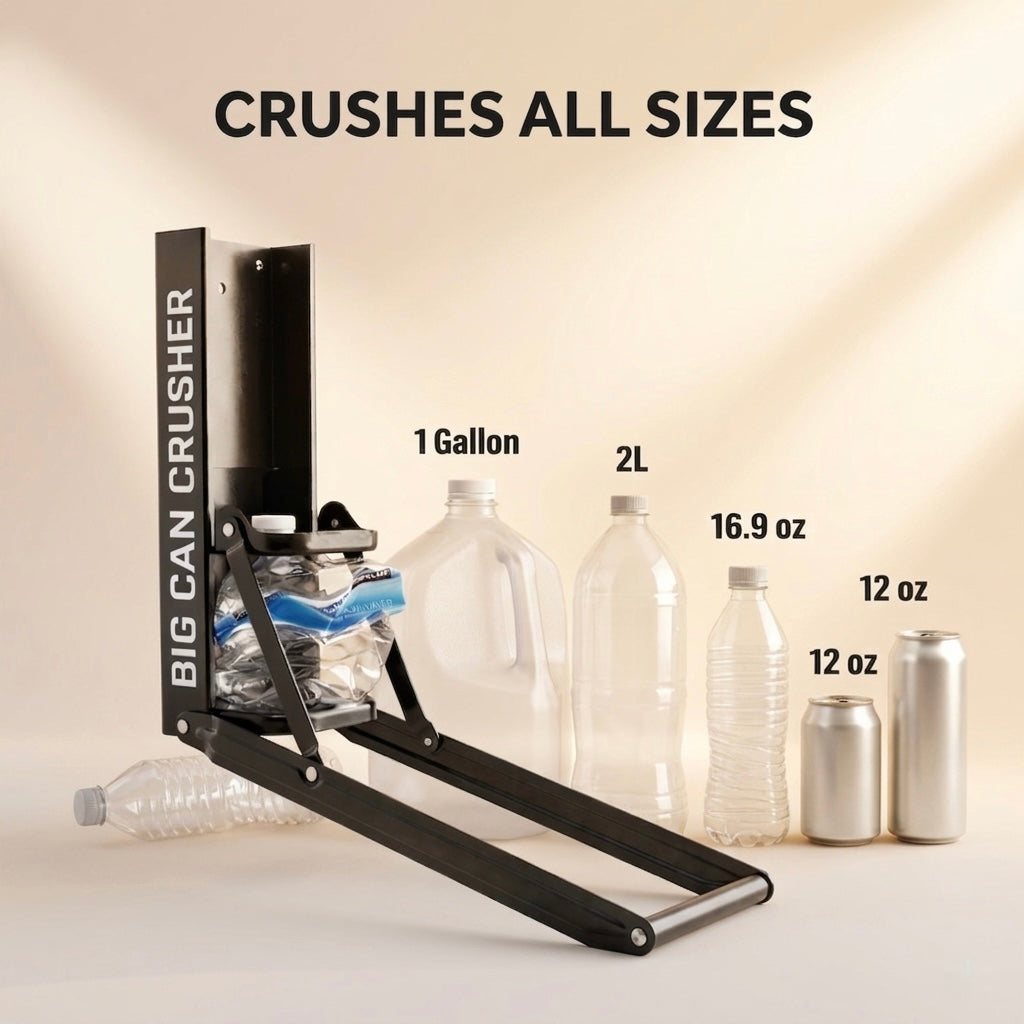
If your household goes through a lot of 2-liter bottles, water bottles, and gallon jugs, flattening them before they hit the bin makes a big difference in space. We will cover that too, including how a wall-mounted tool like BIG CAN CRUSHER fits into the routine.
How to Read the Number on a Plastic Bottle
Most plastic containers carry a small triangle with a number from 1 to 7. This is the resin identification code. It tells you what kind of plastic the item is made from. It does not mean the item is recyclable everywhere—the triangle shape confuses a lot of people. Your local program decides which numbers it accepts.
- #1 PET (or PETE): clear soda bottles, water bottles, many juice and sports drink bottles, some food jars.
- #2 HDPE: milk jugs, water jugs, juice jugs, detergent and shampoo bottles.
- #3 PVC: some cleaning product bottles and specialty packaging.
- #4 LDPE: squeeze bottles, plastic bags, and films.
- #5 PP: yogurt tubs, some bottle caps, medicine bottles, and tubs.
- #6 PS: polystyrene, including foam and some rigid clear cups.
- #7 Other: a catch-all for mixed or less common plastics.
Plastic Bottles That Are Usually Recyclable
#1 PET and #2 HDPE bottles and jugs are the plastics most widely accepted in curbside recycling across the United States. They are common, easy to identify, and there are established markets for the recycled material. That covers the bulk of what most households empty:
- 16.9 oz water bottles and 20 oz soda bottles (#1)
- 2-liter soda bottles (#1)
- Gallon milk jugs and gallon water jugs (#2)
- Juice jugs and many detergent and shampoo bottles (#2)
Many programs also accept #5 containers, though acceptance is less consistent than for #1 and #2. Your city website or hauler app is the final word, but if you only remember one rule, it is this: empty #1 and #2 bottles and jugs are the safest bets in most places.
Plastics That Often Cause Problems
Some plastic items are frequently rejected or create headaches at sorting facilities:
- Plastic bags and film (#4): most curbside programs do not want them because they tangle in sorting machinery. Some grocery stores run separate drop-off bins.
- Foam (#6): rarely accepted curbside.
- #3 and #7 containers: often not accepted; check locally.
- Bottles that held motor oil, pesticides, or other hazardous chemicals: many programs exclude them even when the plastic number is #2. These usually belong in household hazardous waste collection.
- Containers with food or liquid left inside: residue can contaminate other recyclables.
- Very small items: tiny pieces can fall through sorting screens.
When in doubt, the common advice from recycling programs is to leave it out of the recycling bin rather than guess. "Wishful recycling" adds contamination and sorting work.
Caps, Labels, and Rinsing
Rules on caps have changed over the years, and they still vary by program. Many programs now ask residents to put caps back on empty bottles so the small caps get captured instead of falling through the sorting equipment. Others still ask you to remove them. Check what your hauler says.
Labels can usually stay on—sorting and washing at the reprocessing stage handle them. A quick rinse is a good idea for milk jugs, juice bottles, and anything sticky, mainly to keep odors and pests away while empties wait at home. You do not need to scrub bottles spotless.
Should You Crush Plastic Bottles?
Empty bottles and jugs are mostly air. A bin full of round 2-liters and gallon jugs fills up long before it is heavy. Crushing them lets you store far more between pickups and keeps overflow bags out of the kitchen or garage.
Before crushing, look at your local rules—some programs, and many deposit-redemption machines in bottle-bill states, prefer containers left whole. If your program accepts flattened bottles, a simple routine works well:
- Empty the bottle and give it a quick rinse if needed.
- Remove the cap so the air can escape. A capped bottle traps air and springs back.
- Crush the bottle flat.
- If your program wants caps on, screw the cap back onto the flattened bottle so it holds its shape.
- Drop it into your recycling tote.
Water bottles flatten by hand reasonably well. 2-liter bottles and gallon jugs are harder—they are big, stiff at the shoulders, and tend to pop back. That is where a mechanical crusher helps. BIG CAN CRUSHER is an all-metal, wall-mounted crusher with a chamber sized for 1-gallon jugs, so it flattens gallon milk and water jugs, 2-liter bottles, 16.9 oz water bottles, and 12 oz aluminum cans with a pull of the handle. Most small can crushers only fit 12 oz cans and leave the big plastics untouched.
For step-by-step help with the bulky ones, see our guides on how to crush 2-liter bottles for recycling and how to crush a gallon milk jug. For the wider question of when flattening is a good idea, read should you crush cans before recycling.
Bottle Deposits and Redemption
Several U.S. states have container deposit laws, sometimes called bottle bills. If you live in one, many beverage bottles carry a refund value printed on the label. Redemption centers and reverse vending machines often need to scan the barcode, so a crushed bottle may not be accepted for a refund. Keep deposit containers you plan to redeem intact, and crush only the non-deposit bottles and jugs headed for the curb—unless your redemption site tells you otherwise.
A Simple Home Setup That Works
Recycling goes smoothly when it is easy. Put one tote for plastics and cans where empties pile up—kitchen, pantry, laundry room, or garage. Mount a crusher on a solid wall right above it, into studs or with properly rated anchors, so flattening a bottle takes a couple of seconds. Keep a small bag nearby for items you must redeem or drop off separately. On collection day, carry out the tote. Mounting details and capacity are listed on the BIG CAN CRUSHER product page, and common questions are answered on our FAQ page.
Practical Takeaway
Empty #1 PET and #2 HDPE bottles and jugs—water bottles, soda bottles, 2-liters, milk jugs, and detergent jugs—are the plastics most widely accepted for recycling. Check your local rules for everything else, keep bags and foam out of the curbside bin, follow your hauler's guidance on caps, and give sticky containers a quick rinse. Where your program allows it, crushing bottles and jugs before they go in the bin saves a lot of space, especially for the gallon jugs and 2-liter bottles that fill a bin fastest.
FAQ
Which plastic bottles are recyclable?
In most U.S. curbside programs, #1 PET bottles (water, soda, 2-liter) and #2 HDPE bottles and jugs (milk, water, juice, detergent) are accepted. Other types depend on your local program.
Does the recycling symbol mean a bottle is recyclable?
No. The number inside the triangle identifies the type of plastic. Whether it is recyclable where you live depends on your local program.
Should I leave the cap on a plastic bottle?
Many programs now ask you to put caps back on empty bottles, but some still ask you to remove them. Follow your hauler's instructions. If you crush bottles, take the cap off first so the air can escape, then put it back on the flattened bottle if your program wants caps on.
Can I recycle crushed plastic bottles?
Many programs accept them. Some programs and most deposit redemption machines prefer whole containers. Check local rules before flattening anything you plan to redeem.
Can BIG CAN CRUSHER crush gallon jugs and 2-liter bottles?
Yes. Its chamber is sized for 1-gallon jugs, so it crushes gallon jugs, 2-liter bottles, 16.9 oz water bottles, and 12 oz aluminum cans. Do not put glass, aerosol cans, or full containers in it. See the product page and FAQ page for details.
Crush gallon jugs, 2-liter bottles & cans in one pull
See the BIG CAN CRUSHER