Heavy Duty vs Plastic Can Crushers: Which Lasts Longer?
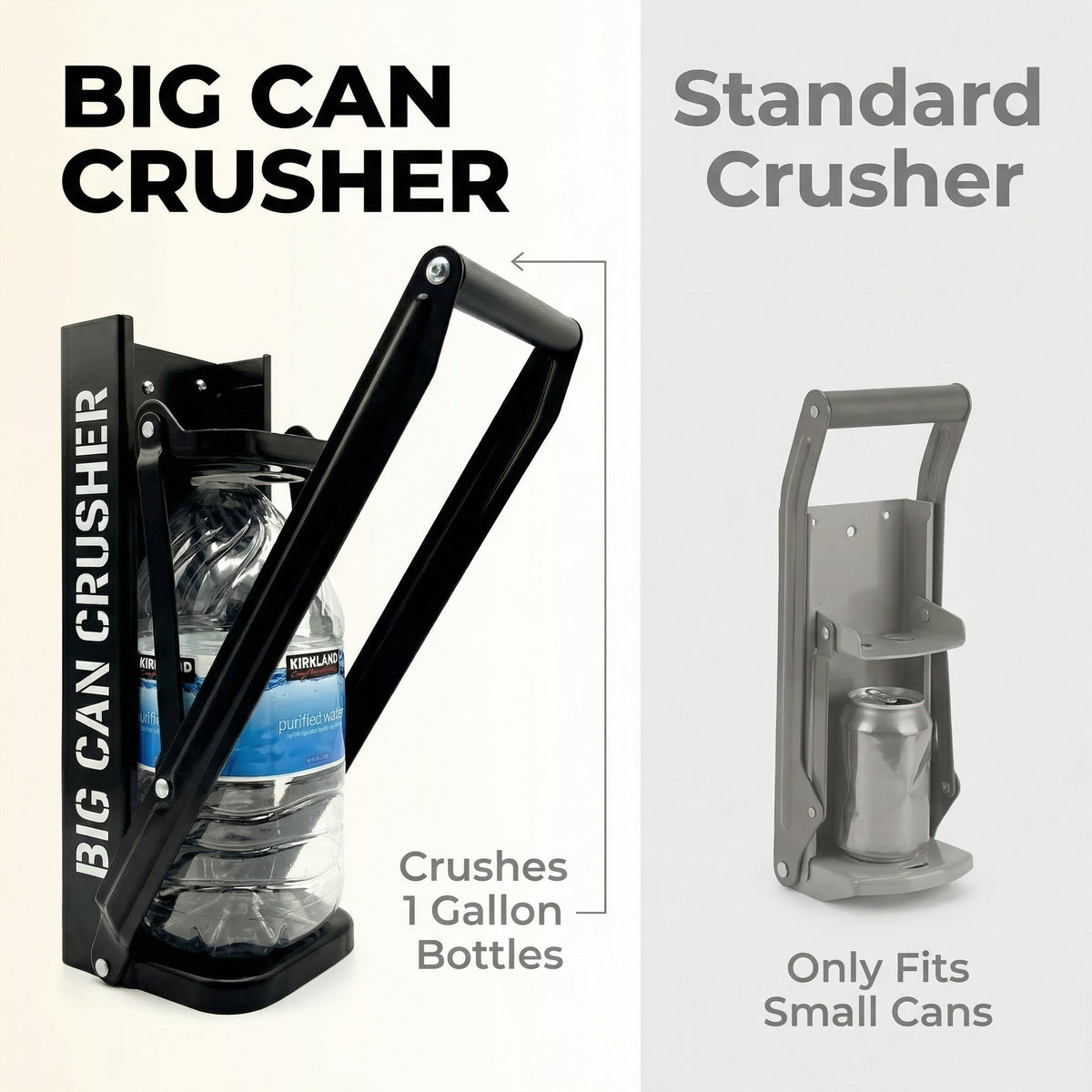
If you have ever owned a cheap can crusher, you probably know how the story ends: a cracked plastic hinge, a handle that wobbles, or a frame that bends the first time you try something bigger than a soda can. The choice between a heavy duty can crusher and a plastic one comes down to more than price. It decides how long the tool lasts, what it can crush, and how much effort each pull takes. This guide walks through the real differences so you can pick a crusher you will not be replacing next year.
Why Can Crushers Fail in the First Place
A can crusher is a lever. Every time you pull the handle, you multiply the force of your arm and push it into a small area. That force does not just flatten the can. It also travels through the handle, the pivot point, the mounting plate and the screws in your wall. Each of those parts gets stressed on every single pull.
That is why crushers usually fail at the same few spots:
- The hinge or pivot. This is where the load is concentrated. A plastic pivot can crack or wear into an oval shape, and then the handle starts to wobble.
- The handle. A thin or hollow plastic handle can flex, and repeated flexing eventually leads to a crack.
- The crushing plate. If the plate is plastic, it can warp or chip, especially when a can lands off center.
- The mounting points. Plastic screw holes can split when the crusher is pulled hard against the wall.
Heavy duty steel crushers are designed to handle that same load without bending or cracking, which is the main reason they last longer.
Plastic Can Crushers: What You Get
Plastic crushers are popular because they are light, inexpensive and easy to find. For someone who crushes a few soda cans a week, they can do the job for a while. Their strengths are simple:
- Low upfront cost
- Light weight and easy to mount
- Fine for standard 12 oz aluminum cans
The trade-offs show up over time. Most plastic models are sized only for 12 oz cans, so they cannot take 2-liter bottles or gallon jugs at all. The plastic parts that carry the load, especially the hinge, are the weak point. And because plastic flexes, some of your effort goes into bending the tool instead of flattening the can, which makes each pull feel less solid.
Heavy Duty Steel Can Crushers: What You Get
A heavy duty can crusher uses metal for the parts that carry force: the body, the handle, the crushing plate and the pivot hardware. That changes how the tool behaves in a few important ways.
- Rigidity. Steel does not flex the way plastic does, so more of your pull goes straight into the container.
- Durability at the pivot. A metal pivot does not crack from repeated stress the way a plastic hinge can.
- Bigger capacity. Because the frame is strong enough, the chamber can be built larger. That is what makes crushing 2-liter bottles and gallon jugs possible.
- A solid feel. A rigid crusher bolted to a wall feels predictable on every stroke.
The downsides are a higher price and a heavier unit that needs a proper wall mount. For most households that recycle regularly, those trade-offs pay off because you buy the tool once.
Side-by-Side: Heavy Duty vs Plastic
| Feature | Plastic crusher | Heavy duty steel crusher |
|---|---|---|
| Main material | Plastic body and hinge | Steel body, handle and hardware |
| Typical capacity | 12 oz cans | Depends on the model; larger models take 2-liter bottles and gallon jugs |
| Weak point | Hinge and handle | Usually the wall mount if installed poorly |
| Feel when crushing | Some flex | Rigid and consistent |
| Price | Lower | Higher |
| Best for | Occasional soda cans | Regular recycling of cans and bottles |
Capacity Matters as Much as Durability
Durability is only half the story. Think about what actually fills your recycling bin. In many homes, the bulky items are not soda cans. They are 2-liter bottles, gallon milk and water jugs, and cases of 16.9 oz water bottles. Those containers take up far more space than cans, and a 12 oz crusher cannot help with them at all.
BIG CAN CRUSHER was built for exactly that problem. It is an all-metal, wall-mounted crusher with a chamber sized for 1-gallon jugs, so it crushes 2-liter bottles and gallon jugs as well as 16.9 oz water bottles and 12 oz aluminum cans. There are no plastic structural parts, and the handle pivots on metal hardware rather than a plastic hinge. If you want step-by-step help with the bigger containers, see our guides on how to crush a gallon milk jug and how to crush 2-liter bottles for recycling.
How to Make Any Can Crusher Last Longer
Whichever type you choose, a few habits reduce wear and keep crushing easy:
- Mount it solidly. Screw into studs or use anchors rated for the load. A loose mount puts extra stress on the frame and makes the pull feel sloppy. Our step-by-step installation guide covers height and placement.
- Set the right height. When the raised handle sits around chest to shoulder height, you can pull down with your body weight instead of jerking with your arms.
- Uncap bottles and jugs. A capped bottle traps air and pushes back against the handle. Removing the cap and squeezing out some air first makes the crush smoother and easier on the tool.
- Center the container. Off-center loads twist the plate and pivot. Line the can or bottle up in the middle of the chamber.
- Use a smooth pull. A steady stroke is easier on any crusher than slamming the handle.
- Check the hardware now and then. Like any lever tool, tighten the mounting screws and pivot hardware if you notice play.
Which One Should You Buy?
A plastic crusher can make sense if you only crush the occasional 12 oz can and want the lowest price. If you recycle every week, crush more than just cans, or are tired of replacing broken crushers, a heavy duty steel model is the better long-term choice. You get a rigid tool, a pivot that is not made of plastic, and, with a larger model, the ability to flatten the 2-liter bottles and gallon jugs that take up the most room in your bin.
For more on what separates a good crusher from a frustrating one, read our guide to the best wall mount can crusher in 2026.
FAQ
Do plastic can crushers really break that easily?
It depends on the model and how often you use it, but the hinge and handle are the common failure points because they carry the most stress. Plastic can crack or wear at the pivot over repeated use, while steel is far more resistant to that kind of fatigue.
Is a heavy duty can crusher harder to use?
Usually the opposite. A rigid steel frame does not flex, so more of your effort goes into the container. With a long handle and the crusher mounted at the right height, small cans take very little effort and uncapped 2-liter bottles and gallon jugs take a firm, smooth pull.
Can a heavy duty crusher handle 2-liter bottles and gallon jugs?
Only if the chamber is big enough. Many crushers, metal or plastic, are sized just for 12 oz cans. BIG CAN CRUSHER has a chamber sized for 1-gallon jugs, so it takes 2-liter bottles and gallon jugs as well as water bottles and cans.
Does a steel crusher need special installation?
It needs a solid wall mount. Screw it into studs or use anchors rated for the load, and set it at a comfortable height. BIG CAN CRUSHER comes fully assembled with the mounting hardware included.
Where can I find more answers?
Visit our FAQ page for questions about shipping, installation and what the crusher can handle.
Crush gallon jugs, 2-liter bottles & cans in one pull
See the BIG CAN CRUSHER