How to Cut Your Household Recycling Volume
Overflowing recycling bins are a common household problem. Milk jugs, soda bottles, water bottles and aluminum cans take up a surprising amount of space even when they are empty. Cutting that volume does not require a complicated system. A few habits, a clear sorting spot and a way to flatten bulky containers can shrink what you put out each week and make recycling feel manageable again.
Why Recycling Takes Up So Much Room
Empty containers keep most of their original shape. A gallon milk jug, a 2-liter soda bottle and a case of water bottles can fill a bin long before the weight is high. Soft drink cans stack a little better than bottles, but loose cans still leave a lot of air in the bin. The result is the same: you take the recycling out more often than you need to, and the bin looks full even when you have not generated that much waste by weight.
The biggest space hogs in most homes are plastic bottles and jugs. Cans matter too, especially if you drink a lot of soda or sparkling water. Flattening those items is the fastest way to cut household recycling volume without changing what you buy.
Sort First, Crush Second
Volume shrinks fastest when recycling is sorted before it piles up. Keep a simple station near the kitchen or garage with separate spots for:
- Aluminum cans
- Plastic bottles and jugs
- Cardboard and paper (flattened and dry)
- Glass, if your local program accepts it separately
Rinse containers when they are messy, and leave the caps off plastic bottles and jugs before you crush them. A capped bottle traps air and fights every attempt to flatten it. Taking the cap off and pressing out some air first makes crushing much easier, whether you do it by hand or with a wall-mounted tool.
Cardboard should be broken down flat. That alone can free a large share of bin space on grocery day. Keep paper dry so it does not contaminate the rest of the load.
Flatten the Bulky Containers
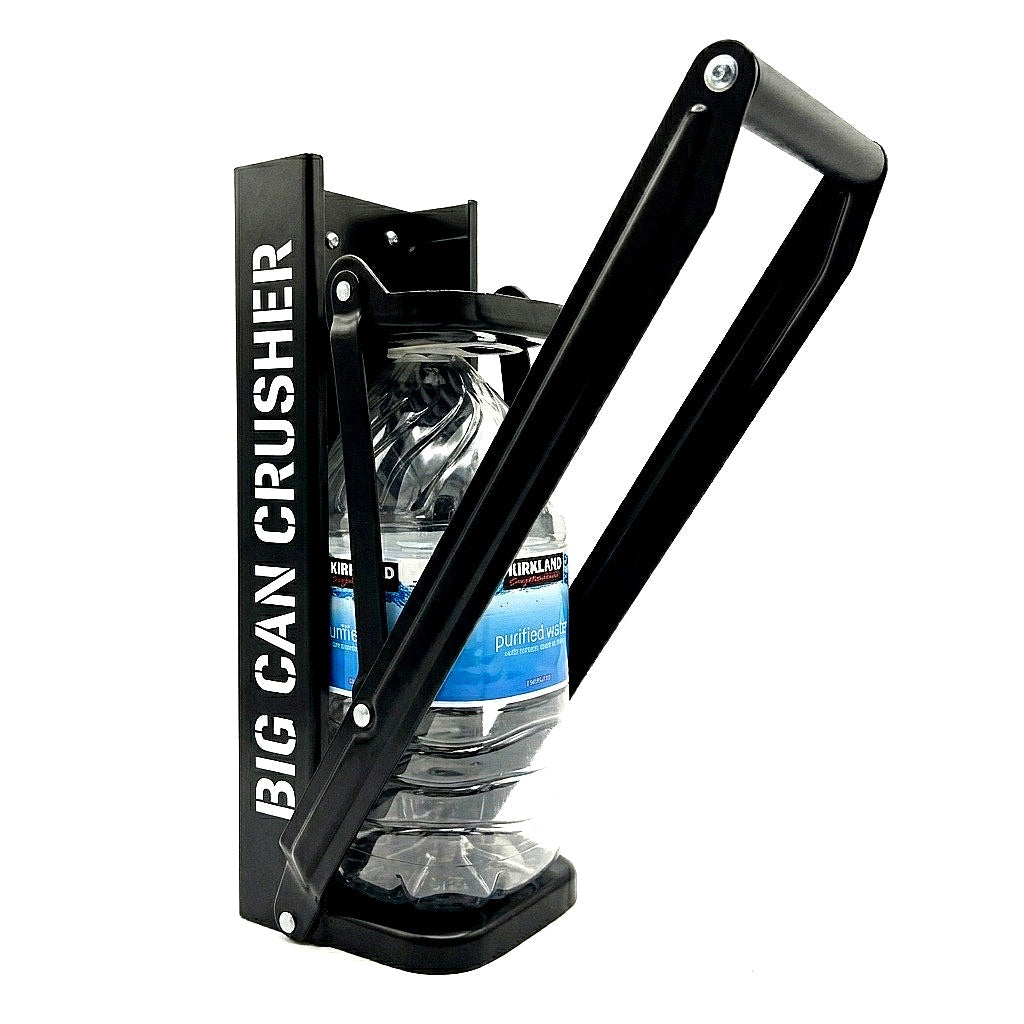
Hand-crushing works for thin cans, but gallon jugs and 2-liter bottles are awkward to flatten by foot or by hand, and they bounce back. A wall-mounted can crusher sized for larger containers turns that chore into a quick pull of a handle. That is where a tool like BIG CAN CRUSHER fits into a household volume plan: it is built to crush 12 oz cans, 16.9 oz water bottles, 2-liter bottles and gallon jugs, so the items that waste the most space can be compacted before they hit the bin.
If gallon milk jugs are your main problem, see our guide on how to crush a gallon milk jug. For soda and other large PET bottles, read how to crush 2-liter bottles for recycling.
Mount the crusher at a comfortable height so you can pull the handle with steady force. Uncap bottles and jugs first, center them in the chamber, and use a smooth stroke. Crushed containers stack or bag far more tightly than round empties, which means fewer trips to the curb or the recycling center.
Practical Habits That Shrink the Bin
Crushing helps most when it is paired with a few everyday habits:
- Crush as you go. Flatten cans and bottles when you empty them instead of letting a tall pile grow. A short session each evening keeps the bin under control.
- Use a bag or box for crushed items. Once flattened, cans and bottles can sit in a smaller bag or tote. That frees the main bin for items you cannot crush.
- Break down boxes the same day. Shipping boxes and cereal boxes should be flattened immediately so they do not claim half the bin overnight.
- Skip the bag of air. Do not store empty bottles with the caps on in a tall stack. Cap off, air out, then crush.
- Know what your program wants. Some cities prefer cans left whole; others accept crushed cans and bottles. Check your local rules so you save space without creating a sorting problem at the facility. More detail on product questions lives on our FAQ page.
- Keep glass separate when required. Glass does not crush safely in a household can crusher and often has its own stream. Mixing it in can make the rest of the load harder to handle.
Where a Wall-Mount Crusher Helps Most
A crusher is most useful in homes that go through a lot of beverages: families with gallon water or milk jugs, people who buy 2-liter sodas, offices or garages with cases of canned drinks, and anyone whose recycling day arrives with a bin that is full of air. Because BIG CAN CRUSHER is an all-metal, wall-mounted unit with a chamber sized for 1-gallon jugs, it can handle the large plastic containers that cheap 12 oz crushers cannot. That single difference is often what actually cuts household recycling volume, not just tidy soda cans.
Place it on a solid wall near where empties collect—kitchen, pantry wall, laundry room or garage. Screw into studs or use rated anchors, and keep a small bin underneath for crushed pieces. For mounting tips, use our wall mount can crusher installation guide.
What Not to Expect From Crushing Alone
Crushing does not change whether an item is recyclable. Dirty containers, non-recyclable plastics and items your city rejects still do not belong in the bin. Crushing also does not replace rinsing when food residue would contaminate a load. Think of volume reduction as a space and convenience upgrade on top of correct sorting, not a substitute for it.
Avoid inventing shortcuts that create hazards. Do not crush aerosol cans, full containers or glass in a can crusher. Stick to empty aluminum cans and the plastic bottles and jugs your tool is designed for.
A Simple Weekly Routine
Here is a routine that works for many households:
- During the week, rinse and uncap bottles and jugs, then crush cans and large plastics as they empty.
- Flatten cardboard the day it arrives.
- Store crushed cans and bottles in one compact bag or tote.
- On collection day, move that bag plus any uncrushed accepted items to the curb bin.
Most families notice the difference within a week: the same recycling takes less space, the bin lid closes more easily, and overflow bags become less common. If you want a durable tool sized for cans, water bottles, 2-liter bottles and gallon jugs, look at the BIG CAN CRUSHER product page for capacity and mounting details.
FAQ
Does crushing cans and bottles actually save much space?
Yes for bulky empties. Round bottles and jugs are mostly air. Flattening them lets you pack far more into the same bin or bag, which is why gallon jugs and 2-liter bottles make the biggest difference when crushed.
Should I crush everything before recycling?
Crush what your local program allows and what your crusher is built for—typically empty aluminum cans and plastic bottles or jugs. Always follow city or hauler rules if they ask for items left whole.
Can BIG CAN CRUSHER handle 2-liter bottles and gallon jugs?
Yes. Its chamber is sized for 1-gallon jugs, so it crushes 2-liter bottles and gallon jugs as well as 16.9 oz water bottles and 12 oz cans. Remove caps first for an easier pull.
Do I need to rinse containers before crushing?
Rinse when there is food or sticky residue so you do not attract pests or contaminate the load. A quick rinse is enough for most bottles and cans.
Where can I learn more about the crusher?
See the product page and our FAQ page for shipping, installation and capacity questions.
Crush gallon jugs, 2-liter bottles & cans in one pull
See the BIG CAN CRUSHER