Plastic Bottle Crusher Guide: Water Bottles, 2-Liters and Jugs Compared
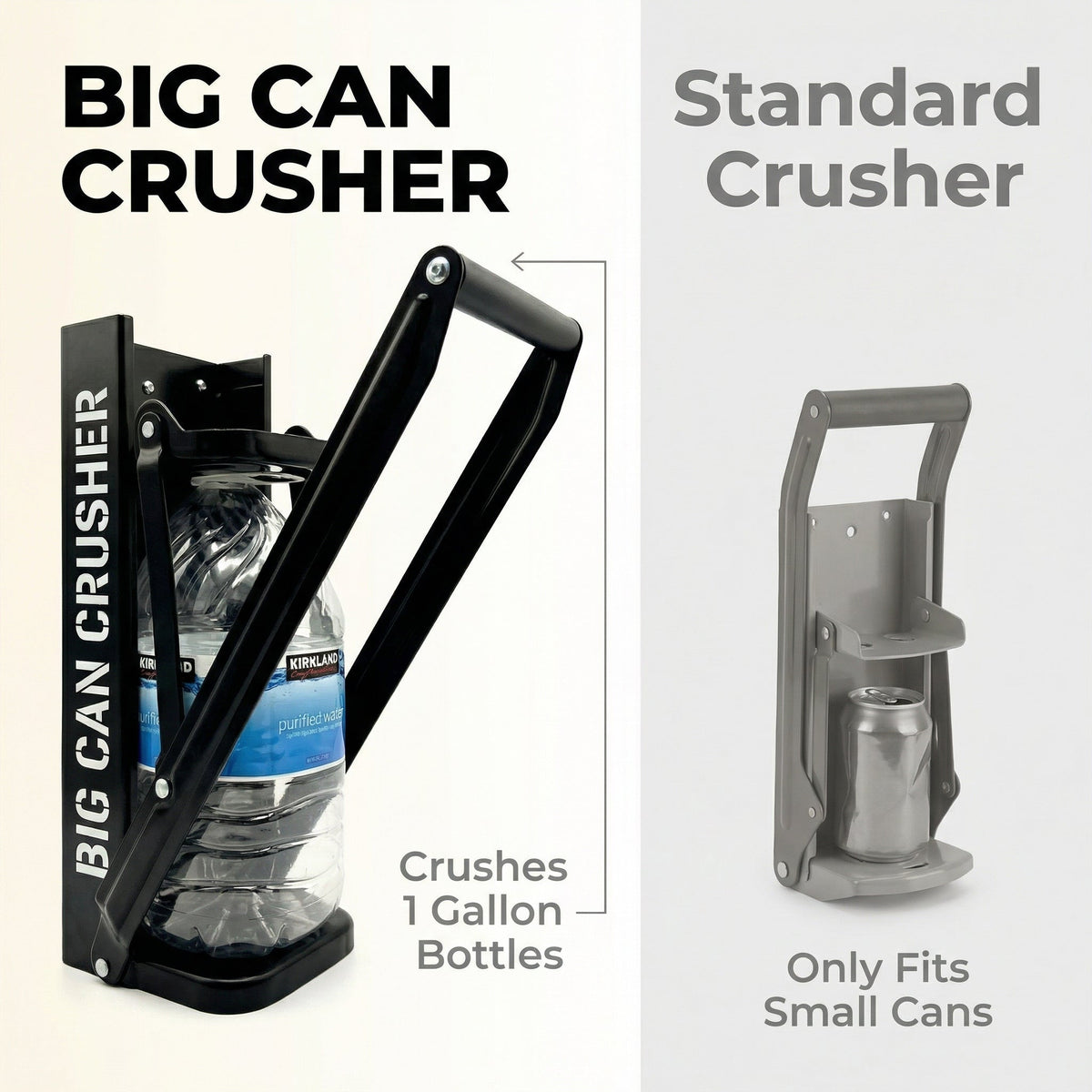
A plastic bottle crusher flattens empty bottles so they take up less room in your recycling bin. The type that works best for most homes is a wall-mounted lever crusher. A long handle gives you enough leverage to flatten a water bottle, a 2-liter or even a gallon jug in one pull. The main things to check before you buy are whether the opening fits your biggest container, whether it's built from steel or plastic, and where you can mount it.
For the easiest crush, take the cap off and squeeze out some air first. Then set the bottle in the chamber and pull the handle down. Before you crush anything, check your local recycling rules. A few programs prefer bottles left round, and rules on caps vary from place to place. The rest of this guide covers each of these points in detail.
What a plastic bottle crusher does (and what it doesn't)
A bottle crusher does one job: it squashes an empty container flat. It doesn't shred, sort or clean anything. It also won't make a non-recyclable bottle recyclable. Your hauler still sets the rules on what goes in the bin.
It also isn't magic on a sealed container. A capped bottle is a trapped pocket of air, and air pushes back. That's why the cap question comes up again and again below.
Which bottles you can crush: water bottles, soda, 2-liters, gallon jugs
Most household plastic bottles crush easily once they're empty and uncapped. What decides whether a bottle fits is its size, not what it's made of. Many small crushers are built for 12 oz cans and simply can't take anything bigger than a slim water bottle.
| Container | Size | What to expect | Tip |
|---|---|---|---|
| Water bottle | 16.9 oz (500 mL) | Thin plastic, flattens easily | Uncap, or crack the cap loose |
| Soda bottle | 20 oz | Thicker walls, ridged base | Uncap so air can escape |
| 2-liter bottle | 2 L | Too big for most can crushers | Needs a chamber sized for large bottles |
| Gallon jug | 1 gallon | Bulky, but soft plastic | Rinse, uncap, squeeze out air first |
Not sure if a bottle belongs in the bin at all? Our guide on which plastic bottles are recyclable explains the resin codes and the usual exceptions.
Manual wall-mounted vs. countertop vs. electric bottle crushers
Manual wall-mounted
A wall-mounted crusher bolts to a wall and uses a long lever arm. The wall takes the force, so you aren't holding the unit steady while you pull. This is the design that handles large plastic bottles best. It needs a permanent spot, such as a garage, pantry wall or utility room.
Countertop and handheld
These are small, cheap and portable. Most are made for aluminum cans and have short handles. Many also use plastic parts. They're fine for a few cans a week, but they usually can't fit a 2-liter or a jug.
Electric
Electric crushers need an outlet and take up floor space. They also add a motor that can fail. For most homes the volume doesn't justify one. A good lever crusher flattens a bottle in about the time it takes to load it.
What to look for: steel construction, opening size, leverage, mounting
- Construction. Plastic hinges and pivots are the parts that crack first. A steel frame and steel handle hold up to repeated hard pulls.
- Opening size. Measure the biggest container you want to crush. If that's a gallon jug, the chamber has to fit a gallon jug. Many crushers stop at 12 oz cans.
- Leverage. A longer handle means less effort. Leverage matters more than your own strength.
- Mounting. Check what hardware comes in the box. Anchor the unit into a stud or other solid surface. A crusher that flexes on drywall wastes your effort and loosens over time.
The BIG CAN CRUSHER wall-mounted bottle crusher was built around these four points. It's made entirely of steel with no plastic parts. The chamber is sized for 1-gallon jugs. It ships fully assembled with all mounting hardware included, and installation takes about 10 minutes.
How to crush a water bottle step by step (and why to cap or uncap)
- Empty and rinse. A quick rinse stops sticky drips and smells, especially from soda or milk.
- Remove the cap. An uncapped bottle lets air escape, so it flattens with much less effort. A capped bottle pushes back against the handle.
- Squeeze out some air. This step matters most for big bottles and jugs. A pre-squeezed container starts out half flat.
- Load it. Lay or stand the bottle in the chamber, depending on your crusher's design.
- Pull the handle down in one smooth motion. Don't jerk it. A steady pull works better.
- Remove it and recap if your program asks. If your hauler wants caps on, screw the cap back on after crushing. This also stops the bottle from springing back open.
Mounting height makes a real difference in effort. Place the crusher so the top of the raised handle sits around chest-to-shoulder height. That lets you use your body weight instead of just your arms. For the larger formats, see our walkthroughs on crushing 2-liter bottles for recycling and crushing a gallon milk jug.
Crushing bottles and cans with one machine
Most homes recycle both plastic and aluminum, so one machine for both saves wall space. The catch is size. A can crusher is usually too small for bottles. A large bottle crusher needs to handle a 12 oz can without the can slipping around.
A can and plastic bottle crusher with a big chamber covers both jobs. The BIG CAN CRUSHER for cans, 2-liters and gallon jugs takes 12 oz aluminum cans, 16.9 oz water bottles, 2-liter bottles and 1-gallon jugs. A 2-liter fits with room to spare and goes flat in a single pull once it's uncapped.
Keep the two materials separate after crushing if your program sorts them. Never crush anything that held pressurized or hazardous contents, such as aerosol cans.
Recycling rules after crushing: caps, labels and local programs
Recycling rules are set locally, and they differ more than most people expect. Before you crush your first load, check these with your hauler or city:
- Flattened or round? Many programs accept flattened bottles. Some sorting facilities, though, prefer bottles left round. Flat plastic can get sorted in with paper by mistake.
- Caps on or off? Many programs now ask you to put caps back on empty bottles. Others want them off or in the trash.
- Labels. Labels can usually stay on. Most programs don't expect you to peel them.
- Deposit bottles. In states with a bottle deposit, a crushed container may not be accepted for a refund. Check your state's current rules before crushing anything you plan to return.
How much space crushing really saves
The savings come mostly from big containers. A crushed 2-liter or gallon jug frees up far more room than a crushed can, because it takes up so much more air space to begin with. We rate the BIG CAN CRUSHER at up to 80% less recycling space, which means a bin holds about 5x more before it needs to go out.
Your own results depend on what you throw out, so check it yourself. Count how many bottles fill your bin uncrushed in a normal week. Then crush everything for a week and count again. Homes that go through a lot of water bottles, soda and milk will see the biggest difference.
FAQ
Is a bottle crusher worth it?
Probably, if you fill your bin quickly with bulky bottles and jugs or if you often make trips to a drop-off center. Probably not, if you recycle a few cans a week or if your program wants bottles left round.
Will a plastic bottle crusher jam?
Jams almost always come from a container that's too big for the opening or one that's still capped and full of air. If you uncap the bottle, squeeze it first and match it to the chamber size, you shouldn't have trouble with any crusher.
How long does a bottle crusher last?
That depends mostly on what it's made of. Plastic pivots and handles wear out first. An all-steel crusher bolted firmly to a stud has very little that can break.
Can a large plastic bottle crusher handle milk jugs?
Yes, if the chamber is sized for 1-gallon jugs. Rinse the jug, remove the cap and squeeze out most of the air before you pull the handle.
Crush gallon jugs, 2-liter bottles & cans in one pull
See the BIG CAN CRUSHER