Can and Bottle Crusher: Does One Wall-Mount Crusher Really Handle Cans, 2-Liters and Jugs?
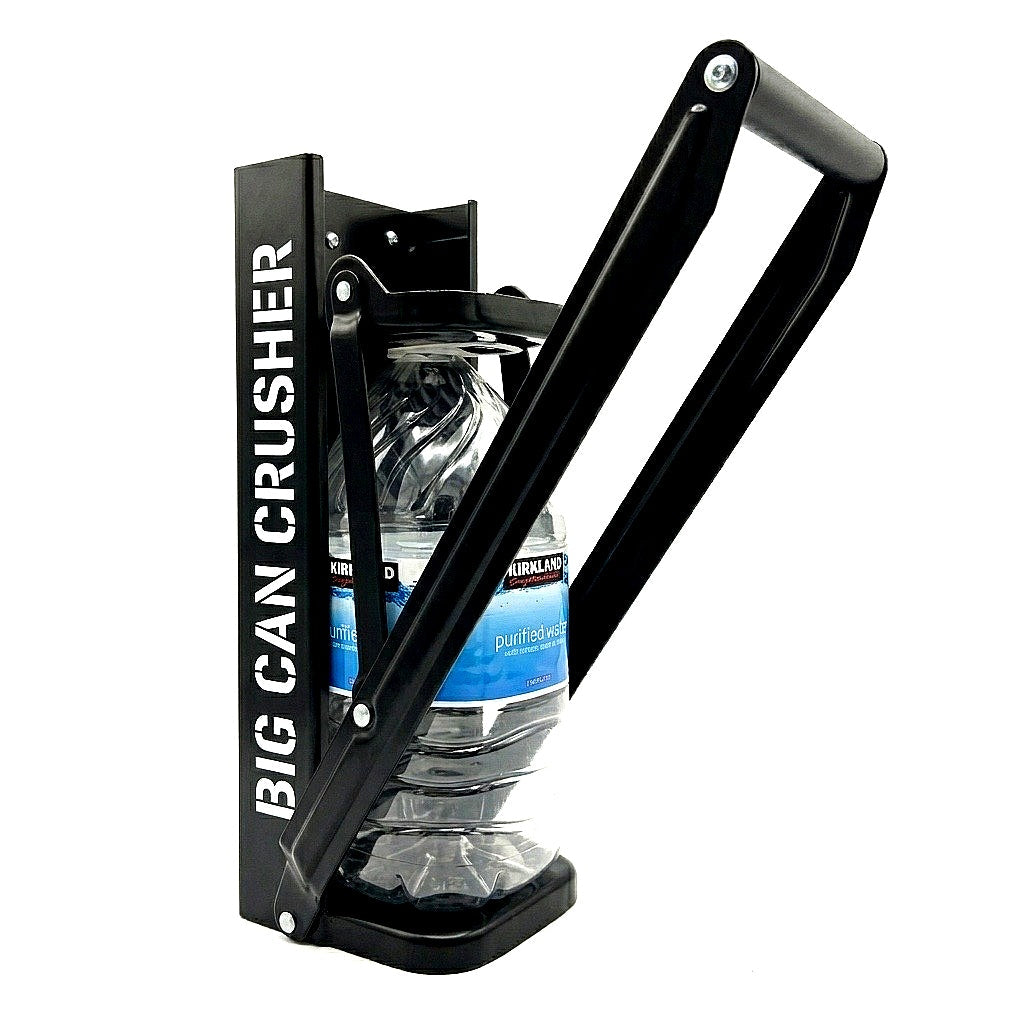
Yes, one wall-mounted crusher can handle cans, 2-liter bottles and gallon jugs, but only if it is built for the biggest item on that list. Most can crushers are sized for a 12 oz can and nothing else. A true can and bottle crusher needs a chamber big enough for a 1-gallon jug, a long steel lever for leverage, and a frame that won't flex when a plastic bottle pushes back.
If your crusher meets those three tests, the routine is simple: uncap plastic bottles, squeeze out some air, set the container in the chamber and pull the handle down once. Cans go flat with almost no effort. Plastic takes a little technique, which is what most of this guide covers.
Can crusher, bottle crusher, or both? Why most crushers only do one job
The typical can crusher is a small plastic or light-metal box with a short lever. It is designed around one shape: a 12 oz aluminum can, about 4.8 inches tall. Try to load a 2-liter bottle into it and the bottle simply doesn't fit.
Bottle-only tools have the opposite problem. Some are made to squeeze plastic but lack the rigid frame needed to fold an aluminum can cleanly. So most households end up with one tool that does cans and a recycling bin full of uncrushed bottles.
A combo crusher, whether you call it a can and plastic bottle crusher or a bottle and can crusher, solves this by sizing everything for the largest container and letting smaller ones fit with room to spare.
What a true combo crusher has to handle
Before you buy, check the product against these four everyday containers:
- 12 oz aluminum cans. Thin metal, crushes easily. Any decent crusher handles these.
- 16.9 oz water bottles. Thin plastic, but tall and springy.
- 2-liter soda bottles. Thicker plastic and roughly 12 inches tall. This is where small crushers fail.
- 1-gallon jugs. Milk, water and juice jugs. Wide, bulky and the true test of chamber size.
If the listing only mentions cans, assume it won't take a jug. The plastic bottle crusher guide comparing water bottles, 2-liters and jugs goes deeper on how each plastic type behaves.
Why plastic bottles are harder to crush than cans
Aluminum folds and stays folded. Plastic doesn't. Three things make bottles trickier:
Springback
PET and HDPE plastic are elastic. Crush a bottle partway and it tries to pop back to shape. You need one full, committed stroke to get past that point.
Trapped air
A capped bottle is a sealed air cushion. The air compresses, pushes back on the handle and can make the bottle bulge or shoot sideways. Removing the cap lets the air escape, and the bottle collapses far more easily. This is true for any crusher, not just one brand.
Leverage
Because plastic resists over a longer stroke than a can, lever length matters more. A short handle means you are fighting the bottle with your arm. A long handle lets the mechanism do the work.
Features that matter in a combo crusher
- All-steel construction. Crushing a 2-liter or a jug puts real load on the frame and pivot. Plastic housings can flex and crack over time. Our comparison of heavy duty vs plastic can crushers covers why the material makes such a difference.
- Lever length. Longer is easier. Look for a steel handle, not a molded plastic one.
- Opening size. The chamber must fit a 1-gallon jug if you want it to handle everything. Measure your largest container.
- Wall mounting. A wall-mounted crusher stays put while you pull, so your effort goes into the crush instead of holding the tool steady.
- Included hardware. Mounting bolts in the box save a trip to the store.
As an example, the BIG CAN CRUSHER wall-mounted can and bottle crusher is built entirely from steel, has a chamber sized for 1-gallon jugs, comes fully assembled and includes mounting hardware for an install of about 10 minutes. For a broader checklist, see what to look for in a wall mount can crusher in 2026.
How to crush each item
Aluminum cans
- Empty the can and give it a quick rinse if it held soda or beer.
- Stand it upright in the chamber.
- Pull the handle down in one smooth motion.
- Drop the flat disk into the bin.
2-liter bottles
- Remove the cap. This is the single most important step.
- Set the bottle in the chamber. In a jug-sized chamber, it fits without forcing.
- Pull the handle all the way down. With a crusher like BIG CAN CRUSHER, the bottle goes flat in a single stroke.
16.9 oz water bottles
- Uncap and empty.
- Give the bottle a quick twist or squeeze by hand to push out some air.
- Load and pull. Thin water bottles flatten easily once the air is out.
1-gallon jugs
- Rinse milk jugs first so residue doesn't sour in the bin.
- Remove the cap and squeeze out most of the air by hand.
- Place the jug in the chamber and pull the handle down.
A capped jug traps air and pushes back against the handle. An uncapped, pre-squeezed jug flattens with much less effort.
Combo crusher vs two separate tools
| Factor | One combo crusher | Separate can and bottle tools |
|---|---|---|
| Wall or counter space | One mounting spot | Two spots, or one tool in a drawer |
| Containers covered | Cans, water bottles, 2-liters, gallon jugs (if chamber is jug-sized) | Depends on each tool; jugs often left out |
| Durability | Steel models built for heavier loads | Small crushers are often plastic |
| Daily habit | One place for every container | Easy to skip the second tool |
The habit point matters more than people expect. If crushing a bottle means finding a different tool, most people just toss it in the bin whole.
Who benefits most
- Households that go through milk jugs and soda bottles every week and are tired of an overflowing recycling bin.
- Garages and workshops, where a wall-mounted unit sits next to the recycling can and stays out of the way.
- Small offices and break rooms with a steady flow of water bottles and cans.
- Bars that need to compact cans and plastic quickly between shifts.
- Rental properties, where a tool that is bolted down and has no plastic parts to snap is easier to maintain.
Common mistakes and what not to put in the crusher
- Leaving caps on. The most common reason a bottle "won't crush."
- Crushing containers with liquid inside. It sprays. Empty everything first.
- Stopping halfway. Plastic springs back. Finish the stroke.
- Glass bottles. Never. Glass shatters.
- Aerosol cans. Never. They can be pressurized even when they seem empty.
- Steel food cans and thick containers. Unless the maker says otherwise, stick to aluminum cans and plastic bottles and jugs.
- Deposit containers. Some redemption programs need an intact container or a readable label. Check your state's current rules before crushing anything you plan to return.
- Mounting too low or too high. A badly placed crusher is harder to use. See the force question below.
FAQ
Will a can and bottle crusher handle full-size gallon jugs?
Only if the chamber is sized for them, so check before you buy. The BIG CAN CRUSHER for cans, 2-liters and gallon jugs is built around a 1-gallon chamber. Uncap and squeeze out the air first for the easiest crush.
Does it work for left-handed users?
A wall-mounted crusher with a lever you pull straight down doesn't depend on which hand you use. Many people use both hands on larger jugs. Placement on the wall matters more than handedness, so mount it where you have clear space on the side you prefer to stand.
How much force does it take?
Less than you'd think with a long steel handle, since leverage does most of the work. For the easiest crushing, mount the crusher so the top of the raised handle sits around chest-to-shoulder height. That lets you use your body weight on the downstroke instead of just your arm.
Why won't my plastic bottle stay flat?
Usually the cap is on, or the stroke stopped short. Remove the cap, push out some air by hand, and pull the handle all the way down in one motion.
Crush gallon jugs, 2-liter bottles & cans in one pull
See the BIG CAN CRUSHER